How to win window washing contracts in BC
Who buys window washing in BC, the fall protection and rope access rules buyers check, what tenders ask for, and how to price window cleaning by building.
Short answer
BC municipalities, school districts, health authorities, housing providers and federal buyers contract out window washing, often once or twice a year per building and sometimes as part of a janitorial contract. Buyers check WorkSafeBC clearance, insurance and your fall protection approach. Price each building from its pane count, access method and height, and show safe, tidy work around occupied buildings.
Window washing is a good public contract for a small crew. The work is seasonal but predictable, the scopes are clear, and buyers with many buildings like to hand the whole list to one reliable firm. It often comes bundled with gutter cleaning or pressure washing, which lets you fill the shoulder seasons.
Who buys window washing in BC?
- Municipalities: city halls, libraries, rec centres and transit shelters, usually once or twice a year.
- School districts: exterior windows across dozens of schools, scheduled around holidays.
- Health authorities: hospitals and care homes, where height and access can be complex.
- Housing providers: BC Housing and non-profit societies with low-rise and mid-rise apartment buildings.
- Colleges, universities and federal buyers.
Some buyers include windows inside a janitorial contract, so read janitorial contracts too. If the janitorial firm subcontracts the windows, that can be a way in. See subcontracting on public work.
What safety rules do buyers check?
Working at height is the main risk in window cleaning, and buyers know it. Under Part 11 of the BC OHS Regulation, fall protection is required where a worker could fall 3 m (10 ft) or more, or could be seriously injured by a shorter fall. The regulation sets an order of preference: guardrails, then fall restraint, then fall arrest or rope access. A written fall protection plan is needed where workers are not protected by permanent guardrails and could fall 7.5 m (25 ft) or more.
For window washing, that usually means:
- Ground-based methods first, such as water-fed poles, which keep most workers off ladders.
- Ladders and lifts used within their limits, with the right training.
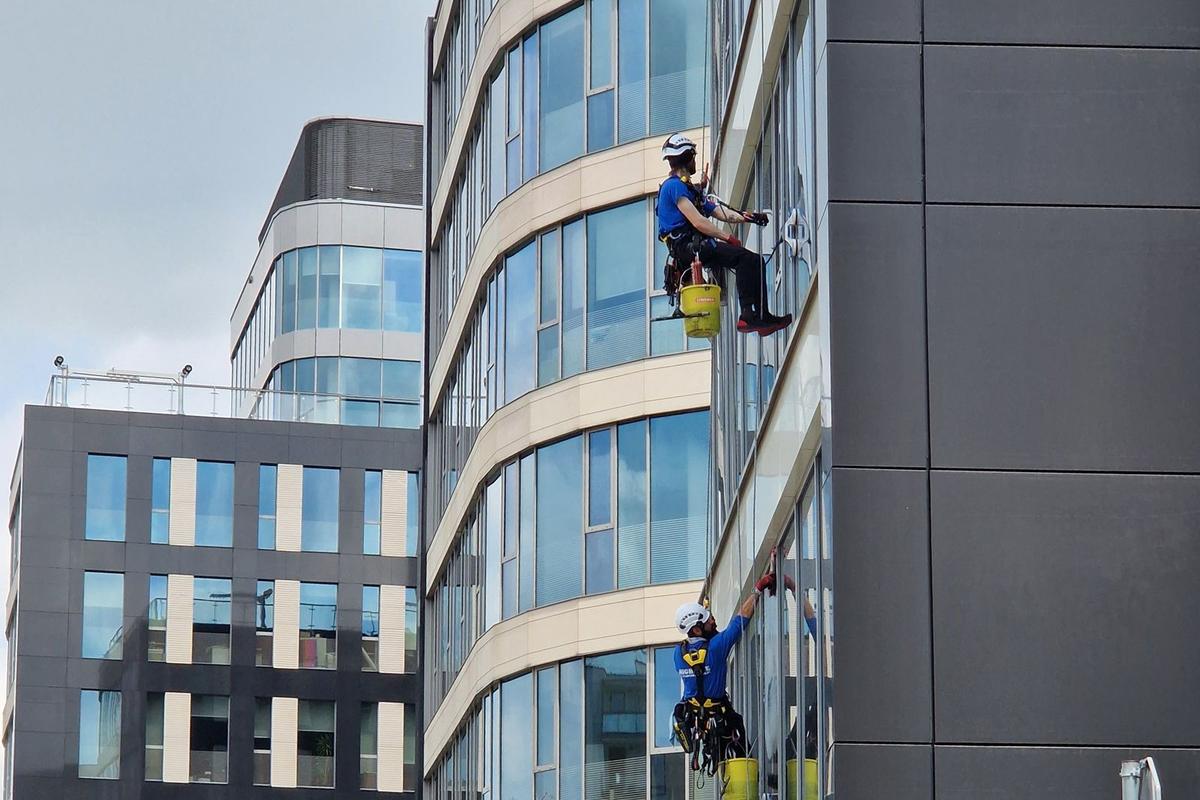
- Rope access or suspended work for taller buildings, using the building's anchors. Ask the buyer for anchor certification records before you price. Uncertified anchors are a common surprise.
Tenders often ask for your safety program, fall protection plan, training records and WorkSafeBC clearance. See a safety program for a small crew.
What does a window washing tender ask for?
- A building list, sometimes with pane counts, heights and photos, sometimes with only addresses.
- Frequency: once a year, twice a year, or quarterly for entrances and storefronts.
- Inside, outside, or both, plus frames, sills and screens.
- Access limits: hours, occupied rooms, school schedules and parking.
- Insurance, usually commercial general liability at $2 million or more. See insurance requirements.
- Notice to occupants before work starts near windows.
If the tender only gives addresses, visit the buildings or ask questions before you price. A three-storey building with a sloped glass atrium is a different job from a one-storey school. See asking questions and reading addenda.
How do I price window washing?
- Count the work: panes or square metres of glass per building, and the access method for each elevation.
- Set production rates for each method: water-fed pole, ladder, lift and rope access are all different.
- Add setup time: rigging, moving lifts, cones and signage.
- Add travel between buildings, grouped by route.
- Add equipment: lift rentals, pure water systems and rope gear.
- Price extras such as screens, frames or hard water stain removal as separate items if allowed.
If the tender asks for a lump sum per building per cleaning, keep your worksheet. You will want it at renewal time and for any change in scope.
What wins window washing contracts?
- A clear safety approach that matches each building, not a generic statement.
- Proof you can cover the whole list in the time window, especially for school districts that want all schools done over spring break or the summer.
- Tidy work: protecting landscaping, cleaning up water and screens, and telling occupants in advance.
- References from similar buildings. See references and experience for tenders.
Once you are in, ask about adding gutter cleaning, pressure washing or skylight cleaning. Buyers like fewer contractors on site, and these extras can turn a twice-a-year contract into steady work.
Sources
Rules and forms change. Check the official page before you rely on a detail here.